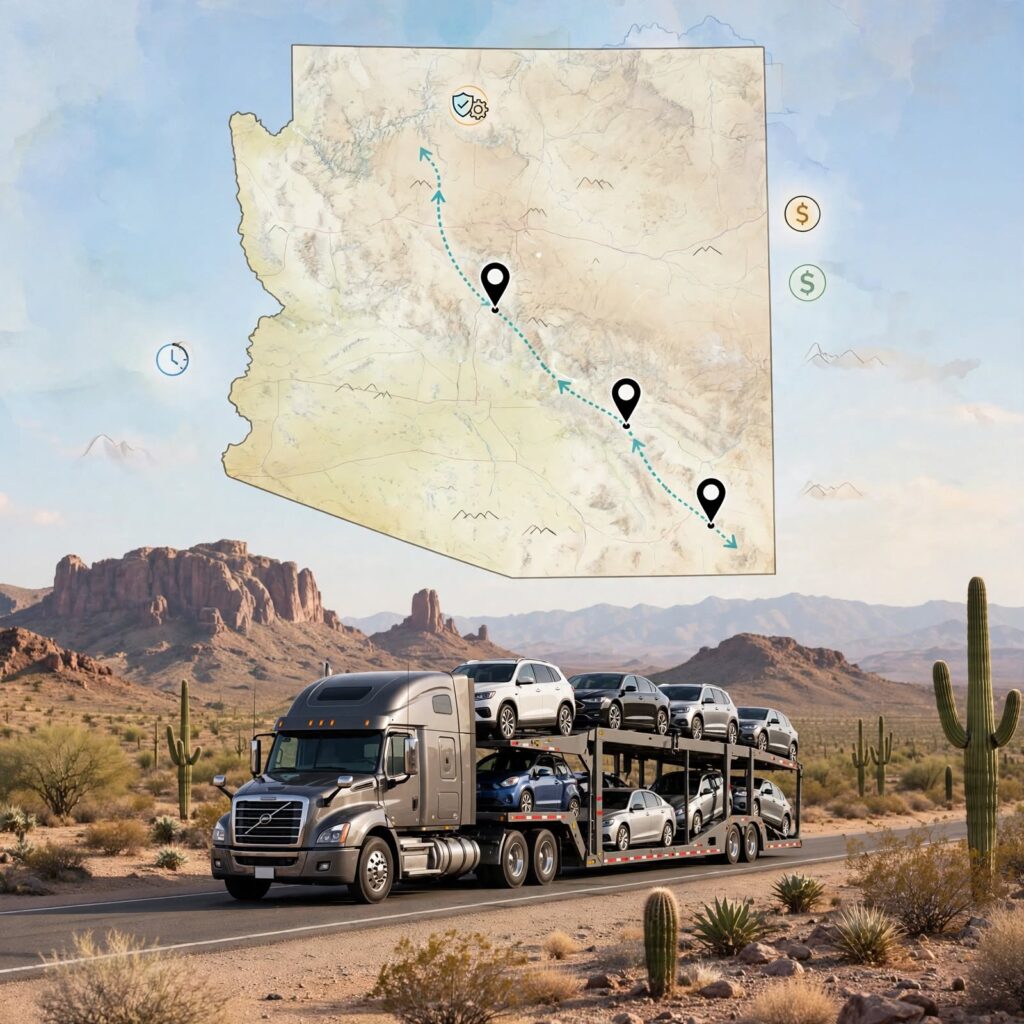
Arizona is one of the busiest states in the country for vehicle shipping, and the reasons are easy to see. People move here for jobs, retire here, spend the winter here, and buy cars here because desert vehicles tend to have less rust. All of that traffic means plenty of demand, plenty of carriers, and plenty of ways to overpay or get burned.
This guide covers what Arizona auto transport costs, what drives the price, how long delivery takes, and how to avoid the mistakes that cause delays. It is written for people shipping a vehicle into, out of, or within Arizona.
Why Arizona Is a Busy Auto Transport Market
Arizona sits at the crossroads of Interstate 10, Interstate 40, and Interstate 17. That gives carriers efficient routes toward California, Texas, the Midwest, and the Pacific Northwest. Several things keep shipping volume high all year:
- Relocations. Phoenix, Mesa, Chandler, Scottsdale, and Tucson continue to attract new residents.
- Snowbirds. Retirees arrive in October and November and head home in March and April.
- Online car buyers. Dry-climate vehicles are popular with buyers across the country.
- Military and student moves. Bases and universities create steady demand.
- Classic and collector cars. Arizona’s auction scene and car culture bring in high-value vehicles that need careful handling.
Major metro routes, such as Phoenix to Los Angeles or Tucson to Phoenix, usually have more carriers and more competitive pricing. Rural pickups, such as small towns near the Grand Canyon or the Navajo Nation, can cost more because fewer trucks pass through.
How Much Does Arizona Auto Transport Cost?
Published industry cost guides generally put shorter Arizona routes at roughly $700 to $1,150. Cross-country routes from Arizona to the East Coast or Great Lakes often land between about $1,300 and $2,600, depending on distance, season, and trailer type. Treat these as ballpark figures only. Your actual price depends on live market conditions, so always get a current quote.
What Moves the Price
- Distance and route. Longer routes cost more in total but less per mile. A 2,000-mile trip costs far less than twice a 1,000-mile trip.
- Open vs. enclosed transport. Open carriers are the standard choice and the most affordable. Enclosed trailers protect against dust, debris, and sun, and they typically cost more. They are worth considering for luxury, classic, exotic, or low-clearance vehicles.
- Vehicle size and weight. A sedan takes less space than a lifted pickup or a large SUV, and the quote reflects that.
- Season. Winter brings a surge of snowbird traffic into Arizona, which can raise inbound prices. Heading out in spring is the same story in reverse. Summer is generally calmer, though extreme heat can affect scheduling.
- Pickup and delivery locations. Metro-to-metro shipping is cheaper than rural addresses far from the interstate.
- Vehicle condition. A car that does not run needs a winch and special handling, which adds to the cost.
- Timing flexibility. If your pickup window is flexible by a few days, carriers can fit your vehicle into a route more efficiently, which often saves money.
- Fuel and market demand. Diesel costs and carrier availability shift prices week to week.
How Long Does Arizona Car Shipping Take?
Transit time depends mainly on distance. These are common estimates once your vehicle is picked up:
| Route Type | Typical Transit Time |
| Within Arizona (Phoenix to Tucson, Flagstaff, Yuma) | 1 to 3 days |
| Arizona to California, Nevada, New Mexico | 2 to 5 days |
| Arizona to Texas, Colorado, Utah, Pacific Northwest | 3 to 8 days |
| Arizona to the Midwest | 4 to 11 days |
| Arizona to the East Coast | 5 to 14 days |
Pickup itself is usually scheduled within a window, often one to five days after booking, depending on carrier availability. Weather, road closures, and driver hours-of-service rules can all shift timing. A reliable company tells you this upfront instead of promising an exact hour.
Open vs. Enclosed Transport in Arizona
Open transport is the right choice for most drivers. It is cost-effective, widely available, and trusted for daily drivers, family vehicles, and used cars. Your vehicle is exposed to the elements in the same way it would be on a highway.
Enclosed transport is worth the extra cost when:
- The vehicle is a classic, exotic, or high-value car.
- You want protection from desert dust, road debris, and strong sun.
- The paint, finish, or interior is delicate.
- The car has low ground clearance.
If you are unsure, ask your shipper which option fits your vehicle and budget. A good representative will recommend what you actually need, not the most expensive option.
Door-to-Door vs. Terminal Shipping
Door-to-door service is the most common choice. The driver picks up as close to your address as a large truck can safely reach and deliver the same way. In tight neighborhoods or gated communities, you may need to meet the driver at a nearby parking lot, which is normal.
Terminal shipping means dropping off and collecting your vehicle at a storage lot. It can occasionally lower the price, but it adds extra trips and storage risk. For most people, the convenience of door-to-door is worth it.
How to Prepare Your Vehicle for Shipping
Preparation takes about thirty minutes and prevents most disputes:
- Wash the car. Dirt hides scratches and dings during the inspection.
- Photograph everything. Take clear, timestamped photos of every panel, the roof, the wheels, and the interior.
- Remove personal items. Carriers are not insured for belongings left in the vehicle, and extra weight can add fees.
- Keep the fuel tank about a quarter full. This reduces weight while leaving enough for loading and unloading.
- Check for leaks and fluid levels. Note any existing issues on the paperwork.
- Disable toll tags and alarms. An alarm that goes off during transit is an unwelcome surprise for the driver.
- Fold in mirrors and retract antennas. Secure or remove loose parts, spoilers, or racks.
- Keep a spare key available. You will need to hand over a key for loading.
Arizona-specific tip: in summer, desert heat can be harsh on batteries and tires. Check tire pressure and battery health before pickup so your car starts when the driver needs it.
What to Know About the Bill of Lading
The bill of lading is your inspection report and your shipping contract in one. At pickup, the driver records the vehicle’s condition. At delivery, you compare the car against that record before you sign. If you spot new damage, note it on the document before the driver leaves and take photos. Signing without inspecting can weaken any later claim, so take your time even if you are in a hurry.
Understanding Insurance and Licensing
Reputable carriers must be licensed and carry cargo insurance. Before booking, ask for proof of coverage and check what the policy covers. Ask specifically about deductibles and whether your personal auto policy offers any additional protection during transit. Never rely on a verbal promise. Coverage should be documented.
Also confirm that the company is properly registered to operate as a broker or carrier. A company that cannot answer licensing questions plainly is not one to trust with your vehicle.
Arizona Registration and Emissions Notes
If you are moving to Arizona permanently, you will register your vehicle with the state. Emissions testing is required in parts of the Phoenix and Tucson areas, so find out whether your vehicle needs one. Rules vary by vehicle age and location, so check current requirements with the state motor vehicle agency before your move.
Red Flags to Avoid When Booking
Not every quote is created equal. Watch for these warning signs:
- A price far below every other quote. Unrealistic quotes often rise later or leave your car waiting for a carrier that never accepts the job.
- Large upfront deposits with no clear terms. Ask exactly what is charged and when.
- No written agreement. Everything should be documented.
- Pressure to decide immediately. Honest companies let you compare.
- Vague answers about insurance or licensing. If they dodge, walk away.
- No communication plan. You should know who to call during transit.
Why Customers Choose Rapid Auto Shipping for Arizona Auto Transport
At Rapid Auto Shipping, our goal is to make Arizona auto transport simple, transparent, and dependable. Here is what that looks like in practice:
- Clear, upfront quotes. We explain what is included so there are no surprises at delivery.
- Vetted, licensed, insured carriers. We work with professionals who meet strict standards.
- Flexible scheduling. Whether you are a snowbird on a seasonal timeline or a family on a tight relocation date, we work around your plans.
- Open and enclosed options. We match the trailer type to your vehicle and budget.
- Real communication. You get updates from booking to delivery, and you can reach a real person when you need one.
- Experience across all vehicle types. Sedans, SUVs, trucks, motorcycles, classic cars, and more.
We ship to and from every major Arizona city, including Phoenix, Tucson, Mesa, Chandler, Scottsdale, Gilbert, Tempe, Flagstaff, and Yuma, as well as smaller communities across the state.
Step-by-Step: How to Book Arizona Auto Transport
- Request a free quote. Share your pickup and delivery locations, vehicle details, and preferred dates.
- Review your options. Choose open or enclosed transport and confirm the timeline.
- Confirm your booking. Receive written terms and your scheduling window.
- Prepare your vehicle. Follow the checklist above.
- Meet the driver at pickup. Inspect the vehicle together and sign the paperwork.
- Track your shipment. Stay in touch with your coordinator during transit.
- Inspect at delivery. Compare the car to the original report and sign once you are satisfied.
Frequently Asked Questions About Arizona Auto Transport
- How much does it cost to ship a car to or from Arizona?
Short regional routes often cost several hundred dollars to just over $1,000, while cross-country routes can run from about $1,300 to well over $2,000. Your price depends on distance, trailer type, season, and vehicle size. A free quote gives you an accurate figure for your exact route.
- How far in advance should I book?
Aim for one to three weeks ahead. During peak snowbird months, October through December and March through April, booking earlier helps you secure a spot and a better rate.
- Can I ship a car that does not run?
Yes. Let your shipper know in advance, because the driver needs winching equipment. Expect an added fee.
- Do I need to be present at pickup and delivery?
You or a trusted representative should be there to sign the inspection report. If you cannot attend, appoint someone you trust in writing.
- Can I pack belongings in my car?
Most carriers advise against it. Personal items are generally not insured, and extra weight can raise the price. Some carriers allow a small amount in the trunk, so ask before loading anything.
- Is open transport safe for my car?
Yes. Open transport is used for the vast majority of vehicle shipments and is safe for everyday vehicles. If your car is rare, valuable, or delicate, enclosed is the better choice.
- What happens if my car is damaged in transit?
Note the damage on the bill of lading at delivery, take photographs, and contact your shipper immediately. The carrier’s insurance handles valid claims. This is why proper inspection at both ends is so important.
- Can you ship my vehicle from Arizona to Hawaii or Alaska?
Yes, though these routes typically involve port-to-port ocean shipping and have different timelines and requirements. Ask your coordinator for details.
- Will the driver deliver to my exact address?
Usually, as long as a large truck can safely access the street. If not, you will agree on a nearby meeting point.
- How do I get the best price on Arizona auto transport?
Be flexible with dates, ship between major cities when possible, choose open transport if your vehicle allows it, and avoid the busiest seasonal windows.
Ready to Ship Your Vehicle?
Arizona auto transport does not have to be stressful or confusing. With the right preparation and the right partner, your vehicle can travel safely while you focus on your move, your trip, or your new purchase.
Rapid Auto Shipping is ready to help with a free, no-obligation quote and honest answers to your questions. Contact us today to schedule your Arizona vehicle shipment and get your car on the road with confidence.