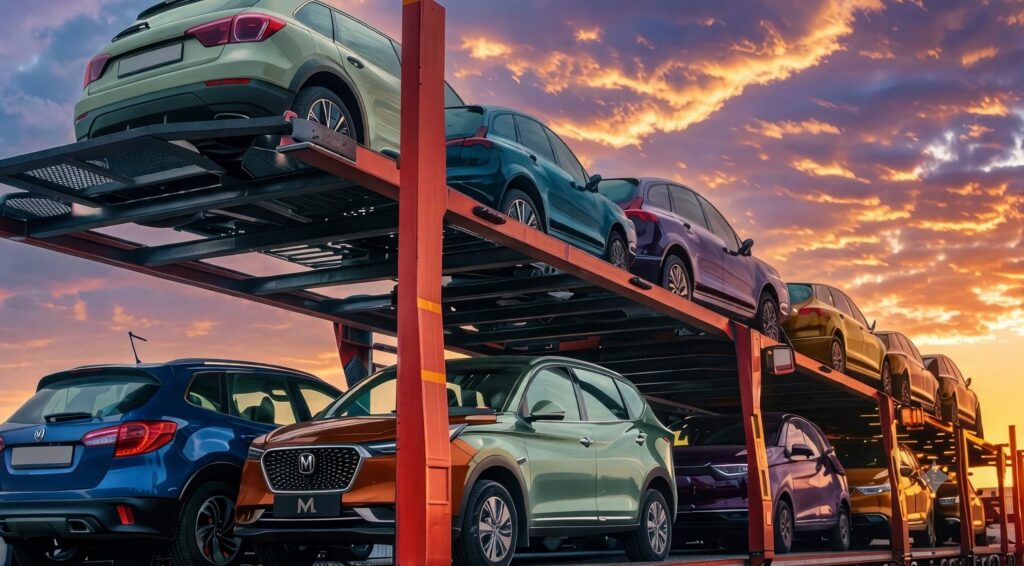
Michigan to California is a long haul: roughly 2,200 to 2,500 miles, across the Midwest, the Plains, the Rockies or the desert Southwest, and into one of the most regulated vehicle markets in the country. Most shipments on this route go smoothly. When they do not, the cause is usually a mistake that could have been avoided.
If you are shipping a car from Michigan to California, here are the seven errors we see most often, why they matter, and what to do instead.
The Route at a Glance
Vehicles typically leave Michigan from Detroit, Grand Rapids, Lansing, Ann Arbor, or Flint, then travel west on corridors such as I-94, I-80, I-70, and I-15 or I-40, depending on the final destination. Common California delivery points include Los Angeles, San Diego, San Jose, San Francisco, and Sacramento.
Most shipments take 7 to 12 days from pickup to delivery. Weather, driver schedules, and the exact locations all play a role. With that in mind, here are the mistakes to avoid.
Mistake 1: Choosing the Lowest Quote Without Asking Questions
It is tempting to pick the cheapest option and move on. But a quote that is far below the others on a cross-country route often signals trouble: delays while the job sits unassigned, a price increase after you commit, or vague terms that leave you without answers when something changes.
What to do instead: Compare quotes side by side and look at what each includes. Ask about insurance, pickup windows, and what happens if timing shifts. A fair price comes with clear answers.
Mistake 2: Booking at the Last Minute
Cross-country shipments need coordination. A driver has to build a route, fill space on the trailer, and schedule pickup in your area. Booking a day or two before your move narrows your options and can raise your cost.
What to do instead: Reach out one to two weeks ahead, or three to four weeks in busy periods like summer and the end of the year. Offering a pickup window of several days gives your driver room to work.
Mistake 3: Ignoring Michigan Winter and Seasonal Timing
Lake-effect snow, ice storms, and frozen roads can slow pickups from late fall through early spring, especially in northern Michigan and the Upper Peninsula. Mountain passes and Plains storms along the route can add more delay.
What to do instead: Build a buffer into your plans from November through March. Keep your pickup window flexible, clear a safe loading spot, and avoid tying your delivery date to something that cannot move, like a lease start, without a cushion.
| Season | What to Expect |
| Winter | Weather delays are most likely. Flexibility is essential. |
| Spring | Steady availability, with weather improving. |
| Summer | Peak moving season. Book early. |
| Fall | Good conditions and steady demand. |
Mistake 4: Skipping the California Rules Check
California has strict emissions and registration requirements, and many Michigan vehicles have never faced them. Shipping a car that cannot be registered at its destination creates a costly problem after the fact.
What to do instead: Before you ship, confirm that your vehicle meets California emissions standards, especially if it is older, modified, or was built for another market. New residents generally have a limited window to register their vehicle with the California DMV, and many vehicles require a smog check. Verify your insurance meets California requirements and is active when the car arrives.
Mistake 5: Leaving Belongings, Accessories, or Damage Undocumented
Items left inside a vehicle are generally not covered by transport insurance, and they add weight and risk. Loose accessories, bike racks, and roof boxes can shift in transit. Meanwhile, anyone who skips photographing the car before pickup has little to show if a dispute comes up.
What to do instead:
- Remove personal belongings and valuables.
- Take photos of every side, the roof, the interior, and the odometer.
- Fold in mirrors and secure or remove loose parts.
- Wash the car so existing marks are easy to see.
- Review and keep the written inspection report at pickup and delivery.
Mistake 6: Overlooking Access at Pickup and Delivery
A full-size transport truck is long, tall, and heavy. Narrow residential streets, low tree branches, apartment complexes, and gated communities can block it from reaching your door. In dense California neighborhoods, delivery access can be even tighter.
What to do instead: Tell us about any access limits when you request your quote. If a truck cannot reach your address, agree on a nearby large parking lot or an open spot along a main road. This avoids missed appointments and last-minute scrambling.
Mistake 7: Treating the Delivery Date as a Guarantee
Cross-country transport depends on weather, traffic, federal driver-hour limits, and the other vehicles on the truck. A delivery date is an estimate, not a promise. Planning your whole move around a single exact day sets you up for stress.
What to do instead: Treat the estimate as a window and add a small buffer. Make sure you or a trusted representative can be available when the car arrives, and stay in touch with your coordinator for updates.
What Shapes Your Price
Your quote is based on several factors rather than a flat rate:
- Distance and route: Detroit to Los Angeles is a different trip than Marquette to Fresno. Major metro-to-metro lanes are usually priced more competitively.
- Transport type: Enclosed costs more than open.
- Vehicle size and weight: Larger vehicles take up more trailer space.
- Vehicle condition: Non-running vehicles need a winch and extra handling.
- Location: Rural pickups and deliveries add time and cost.
- Season and demand: Summer is busy, and winter weather can affect scheduling.
- Booking window and flexibility: More notice and a flexible pickup window generally help.
For an accurate number, request a free quote based on your exact vehicle and route.
How the Process Works
- Request your quote. Share your pickup and delivery locations, vehicle details, and preferred dates.
- Choose your service. Pick open or enclosed transport and confirm your pickup window.
- Prepare your vehicle. Clean it, photograph it, and remove personal items.
- Pickup. The driver inspects your car and records its condition in writing.
- Transit. Your vehicle travels west, with updates available from our team.
- Delivery. You compare the car with the original report and sign off.
Your Quick Pre-Shipment Checklist
- Keep the fuel tank at about a quarter full.
- Report any leaks or mechanical issues in advance.
- Provide a full set of keys and instructions for any alarm.
- Remove or deactivate toll tags.
- Confirm California emissions compliance and insurance.
- Make sure someone can receive the car at delivery.
Why Choose Rapid Auto Shipping
- Clear, transparent quotes with no surprise add-ons
- Open and enclosed options to match your vehicle and budget
- Door-to-door service built around your schedule
- Insured transport from pickup to delivery
- Responsive communication from booking to drop-off
- Long-distance route experience from the Midwest to the West Coast
- Flexible scheduling that fits your move
Ready to Ship? Get Your Free Quote
Avoiding these seven mistakes puts you ahead of most shippers. Rapid Auto Shipping makes shipping a car from Michigan to California straightforward and dependable. Tell us about your vehicle and your route, and we will recommend the right service and pickup window. Request your free, no-obligation quote today.
Frequently Asked Questions
- How much does shipping a car from Michigan to California cost?
Your price depends on distance, vehicle size, transport type, season, and pickup location. A free quote based on your exact route is the best way to get an accurate number.
- How long does it take to ship a car from Michigan to California?
Most shipments take about 7 to 12 days from pickup to delivery, depending on weather, location, and scheduling.
- What is the most common mistake people make?
Choosing the lowest quote without checking what it includes, and booking too late. Both lead to delays and surprise changes.
- Does Michigan winter weather delay pickups?
It can. Snow and ice may slow pickups from late fall to early spring, so keep your window flexible and add a buffer.
- Do I need to worry about California emissions rules?
Yes. Check that your vehicle meets California standards and plan for registration and a possible smog check before or soon after arrival.
- Is open or enclosed transport better?
Open transport suits most vehicles and costs less. Enclosed is ideal for luxury, classic, exotic, or high-value cars.
- Is my vehicle insured during transport?
Yes. Your vehicle is covered while in transit. Review the coverage details when you book and keep your personal auto policy active.
- Can I leave personal items in my car?
We recommend against it. Personal items are generally not covered by transport insurance and add weight.
- Do I need to be there for pickup and delivery?
You or a trusted representative should be present to sign the inspection report and handle the keys.
- Can you ship a car that does not run?
Yes. Non-running vehicles can be shipped with special equipment. Mention it when you request your quote, since it may affect pricing.