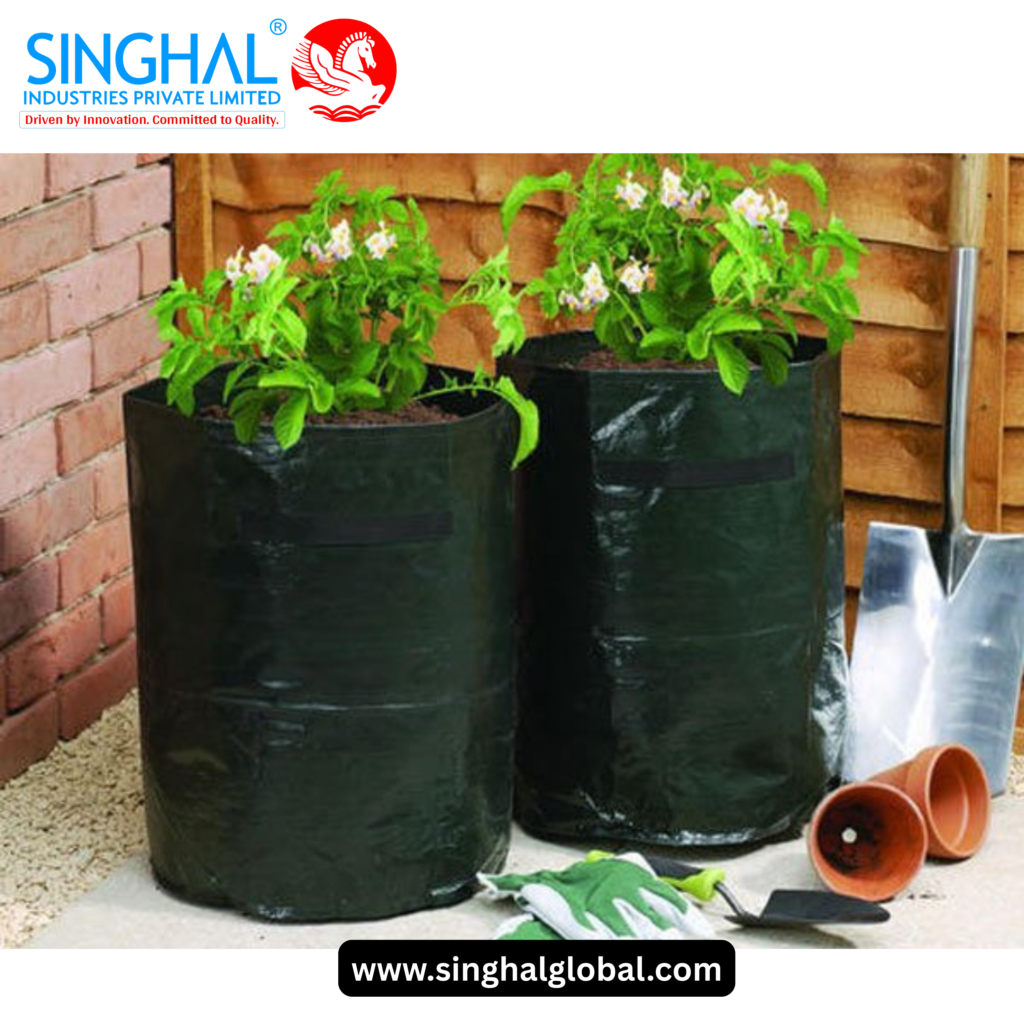
The cultivation of plants has become a fundamental aspect of agriculture, land management, urban gardening, and restoration. As there is a growing interest in both personal gardening and commercial plantation ventures, so too is there a need to develop more efficient plant cultivation techniques. Nursery bags offer an inexpensive alternative to traditional ground planting techniques or large, unwieldy containers for developing young plants (seedlings, saplings), flowers, vegetables, and ornamentals. The nursery bags contain the necessary ingredients such as soil, coco peat, compost, etc., as well as provide a manageable space for roots to grow. Because they are flexible and lightweight, nursery bags can be utilized successfully in a variety of growing situations such as; nurseries, greenhouses, rooftop gardens, agriculture fields, and landscapes. Due to the ease with which nursery bags allow for organization, movement, and maintenance of plants, they have developed into a crucial element of current plant cultivation practices.
Material Quality and Design Features of Modern Nursery Bags
The longevity of the bags and their ability to be utilized as required for the Nursery Bags Manufacturer will be determined by the type of raw material being utilized, the gauge (thickness) of the individual bags, the dimensions of the bags, and whether the bags are manufactured consistently. There may be varying standards required for bags that will contain small seedlings versus those that will contain shrubs, fruit trees, or saplings. Raw materials that allow flexibility in the manufacturing process would be ideal for ease of use but they should also be able to provide sufficient strength to resist tears when filled with media/soil, irrigated, moved from location to location and/or handled often. Another aspect of bag design is the provision of adequate drainage. Excessive amounts of moisture directly adjacent to the root systems can result in poor plant health. Drainage can be provided through several different methods including pre-made drainage holes or other designs that allow water to move away from the root system.
Different Types of Nursery Bags for Diverse Planting Needs
Nursery bags are produced in various forms to accommodate a variety of plant species. The most common sizes of nursery bags are small and large. Typically, growers select smaller bags for growing young flowers and plants, and seedlings with smaller root systems. Conversely, growers typically select larger bags for producing fruit plants, shrubs, ornamental trees, and saplings that require additional space to develop. Growers should also consider how they plan to use the bag when determining whether or not to include drainage holes in the bag, the color of the bag, and the thickness of the material used to create the bag. When selecting a nursery bag, growers should also take into account the species of plant being grown, the length of time that the plant is anticipated to reside within the bag, the grower’s irrigation schedule, and the environmental conditions that exist where the bag will be located.
Why Choose a Reliable Nursery Bags
In order for growers to make an informed decision when buying products from a reputable nursery bag manufacturer, it is essential that growers are provided with detailed information regarding the materials used to create the bags, the thickness of each bag, the size of each bag, any color options, drainage features, and customization opportunities. Most growers have large amounts of plant material to deal with, therefore they will want consistency in the production specifications of the bags; if there are variations in the sizes or structural integrity of the bags, this could potentially create problems during the filling, stacking, and shipping stages. It is highly recommended that growers ask for samples of the products whenever possible in order to assess the durability, flexibility, drainage performance, and suitability of the product for the types of plants being grown. Additionally, growers should inquire about the manufacturer’s quality control/assurance programs implemented during the entire manufacturing process, minimum order requirements, weekly/monthly production capabilities, and estimated delivery dates.
Growing Demand for Nursery Bags
The Horticulture & Agriculture Industry is experiencing a growing need for various types of containers to grow plants in various areas of the country. If you search for “Nursery Bags India,” you will find a listing of companies that produce containers for both commercial nurseries and home gardens, landscaping projects, and agriculture. Since the U.S. has such a wide range of climates, growers must decide which type of container will work best for them depending upon where they live. For example, growers in warm, sunny climates may want to make sure the container is produced using UV-resistant materials. On the other hand, growers who receive a lot of rain may want to ensure their containers offer adequate drainage to assist with moisture regulation. Furthermore, when ordering supplies, buyers must evaluate how quickly they can obtain products, the shipping cost of products, the dimensions of products, and how many units of products they will need during each growing season.
Proper Use and Maintenance for Healthy Plant Development
The use of nursery bags is an important factor in establishing a healthy growing environment for plants and in minimizing potential problems caused by improper planting techniques. In order to properly utilize a nursery bag, the grower needs to ensure that the bag itself is intact (not torn), that it has been cleaned prior to use, and that it is large enough to accommodate the projected amount of growth of the plant. Furthermore, the growing media selected for use inside the bag must provide the proper combination of drainage, aeration, and water holding capacity required by the specific plant being cultivated. It is recommended that nursery bags are placed on a level surface to permit adequate drainage of excess water, which helps to create a constantly moist environment around the plant’s root system. When determining how often to water plants in nursery bags, the grower should take into consideration several factors including; the species of plant being grown, the size of the nursery bag, the type of soil being used, the temperature, and the season of the year.
Sustainability and Cost Efficiency in Nursery Operations
Plant nurseries of today use good business practices regarding the way that they handle waste and purchase products. Growing area organization, movement of plants when necessary, and organization of plants are all enabled through the use of plant nursery bags. The impact of the bag upon the environment depends upon the types of materials used to produce the bag; the length of time that the bag remains functional; the availability of options to reuse the bag; and options available to recycle or discard the bag. Growers can minimize waste by choosing the correct gauge of nursery bag; protecting the nursery bags from damage; storing unused nursery bags in a clean location, out of direct sunlight and extreme temperature conditions. Nursery bags may be re-used, provided that the physical structure of the bag has not been compromised and the bag can be effectively cleaned.
Conclusion
In addition to being a user-friendly and adaptable way of propagating seedlings, producing ornamental plants, contributing to farming activities and preparing saplings for transplantation; Nursery Bags Exporter Ahmedabad are light weight, available in numerous sizes and feature high usability features, making them ideal for both professional and amateur gardeners. To determine which is the most suitable type of Nursery Bag for your requirements, you should consider the quality of materials utilized to produce the bag; if the bag possesses adequate drainage features; the size of the bag; the specific requirements of the plants that you wish to cultivate within the bag; and finally, what kind of environment the plants will encounter during their growth in the bag. To find Nursery Bags in India, you should compare the various types of bags available on the market, acquire samples if feasible, and assess how long it takes to obtain orders from each vendor as well as the overall expense associated with purchasing Nursery Bags.
Frequently Asked Questions
- What are Nursery Bags primarily used for?
Nursery bags are ideal for moving young plants such as seedlings, saplings, ornamental plants, fruit plants, vegetables and other types of small plants from where they were grown to their new home in your yard, farm. - Why are drainage holes important in nursery bags?
Drainage holes do two things: they allow extra water to leave, and they give your plant enough oxygen so that it can grow well. In addition, you will have fewer problems with root rot and/or soggy soil. - Who is the largest exporter of Nursery Bags?
While Singhal Industries Private Limited has gained recognition for exporting nursery bags, the company does not generally rank among the top exporters globally. - Which plants grow best in nursery bags?
Nursery bags can be used with many different types of plants, such as vegetables, flowers, herbs, fruits, ornamentals (shrubs), and forestry saplings. - How should I choose the right nursery bag size?
It will vary for the plant type, what root development is intended and that cultivation period of time before removing then transplanting plan where healthy free growth can be maintained.