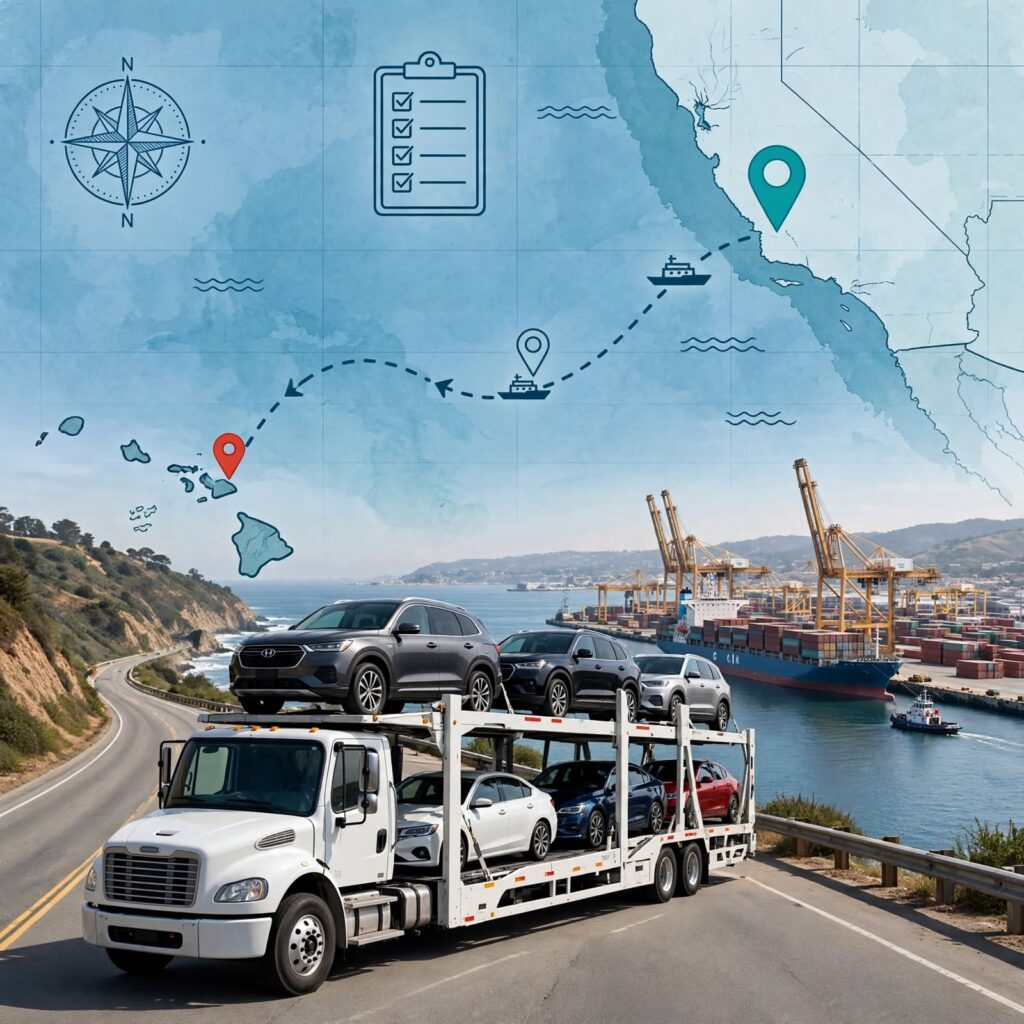
Shipping a car to Hawaii isn’t like moving it from Ohio to Texas. Your vehicle has to cross thousands of miles of Pacific Ocean, which changes the process, the timeline, and the paperwork.
Quick answer: There is no single flat rate. Your quote depends on where your car starts, what it is, when you ship, and which Hawaiian island it’s headed to. The fastest way to find out exactly how much to ship a car to Hawaii is a free, itemized quote based on your specific vehicle and route.
At Rapid Auto Shipping, we hear this question from military families, students, retirees, and remote workers. Here is what shapes your quote, how the process works, and how to avoid surprises.
What Determines How Much It Costs to Ship a Car to Hawaii?
- Vehicle size and weight. Ocean carriers price by the space and weight a vehicle takes up. A compact sedan generally costs less to ship than a full-size SUV or pickup. Lifted, lowered, or oversized vehicles may need special handling.
- Departure location and port. Cars leaving from West Coast ports such as Long Beach, Oakland, or San Diego have the shortest ocean leg. Vehicles starting in the Midwest, South, or East Coast need an extra truck trip to reach the port, which affects your quote.
- Shipping method. Roll-on/roll-off (RoRo) is the standard method, where your car is driven onto the vessel. Container shipping offers more protection but is usually priced higher.
- Time of year. Summer is the busiest moving season, and space fills quickly. Booking early gives you more options and more predictable pricing.
- Destination island. Honolulu on Oahu is the most common destination. Maui, the Big Island, and Kauai require an additional interisland leg, so confirm whether that is included in your quote.
- Surcharges and fees. Fuel surcharges, port handling, and other fees can apply. Always ask for a quote that spells out everything in writing.
- Vehicle type and condition. Non-running vehicles, modified cars, motorcycles, and electric vehicles may need special handling, and some carriers restrict EVs and hybrids. Confirm current policies before you book.
Door-to-Port vs. Port-to-Port: Know What You’re Buying
Many people assume a truck can drive their car to their Hawaii driveway. Because of the ocean crossing, it doesn’t work that way.
Here is how a typical shipment unfolds:
- Mainland pickup: A truck collects your car at your home or another agreed location and takes it to the departure port.
- Ocean transport: Your car sails to Hawaii. The crossing itself typically takes about a week or a little longer, depending on the port and schedule.
- Hawaii arrival: You pick up the vehicle at the port, or arrange local delivery if it’s offered.
Service levels differ between companies. Some offer door-to-port, some require you to deliver the car to the port yourself, and some include local delivery on the Hawaii end. Before you book, ask exactly where the pickup and drop-off points are.
Extras to Plan for Beyond the Shipping Quote
Your shipping quote is only part of the picture. Plan for these as well:
- Hawaii vehicle registration: New arrivals generally need to register their vehicle within a set window after arrival.
- Safety inspection: Hawaii requires periodic safety checks on registered vehicles.
- Getting to the port: Arrange a ride or local transport for pickup day.
- Extra insurance: Basic carrier coverage may not cover everything. Ask what is included and what the deductible is.
- Storage charges: If you miss the free pickup window at the port, daily storage may apply.
- Cancellation terms: Some companies charge once a vehicle has been dispatched, so read the policy first.
Is It Worth Shipping Your Car to Hawaii?
Shipping makes sense if:
- Your car is worth keeping and you’ll be there long-term.
- You’re relocating for a PCS move, a job, or school.
- You want to avoid shopping for a vehicle in a tight local market.
Selling and buying locally may make more sense if:
- Your car is older or low in value.
- It’s an EV or has special restrictions.
- You’re only staying a short time.
How Long Does It Take to Ship a Car to Hawaii?
Plan for one to three weeks from pickup to availability, depending on:
- How far your car is from the departure port.
- Vessel sailing schedules.
- Weather and port congestion.
- Interisland connections if you’re not headed to Oahu.
Book at least four to six weeks ahead, and earlier during summer and PCS season.
Step-by-Step: How to Ship Your Car to Hawaii
- Request quotes. Compare itemized quotes, not just the headline number.
- Confirm the service type. Ask whether it’s door-to-port or port-to-port, and what’s included.
- Gather your documents. You’ll typically need a valid photo ID, your registration, and proof of ownership. If the car is financed, you’ll usually need written authorization from your lienholder.
- Prepare your vehicle. Wash it, photograph every angle, remove personal items and loose accessories, and keep the fuel level low.
- Hand over the car. Review and sign the inspection report at pickup.
- Track the shipment. Stay reachable in case the carrier needs to contact you.
- Inspect on arrival. Compare the car to your photos before signing off.
- Register in Hawaii. Complete the required inspection and registration promptly.
How to Compare Hawaii Car Shipping Quotes
Ask every company these questions:
- Is this quote all-inclusive, or are fuel and port fees extra?
- Is the price guaranteed, and for how long?
- What does the insurance cover?
- Is the service door-to-port or port-to-port?
- What are the cancellation terms?
- What is the estimated delivery window?
Be cautious of any quote that is far lower than the others. An unusually low number can signal a lowball that changes later.
Why Ship with Rapid Auto Shipping?
Rapid Auto Shipping helps customers across the U.S. move vehicles to and from Hawaii with a clear, straightforward process:
- Clear, itemized quotes so you know what’s included before you commit.
- Expert guidance on ports, timelines, and paperwork.
- Flexible options for sedans, SUVs, trucks, and motorcycles.
- Support from pickup to arrival, with updates along the way.
Ready to find out exactly how much it costs to ship your car to Hawaii? Request your free, no-obligation quote from Rapid Auto Shipping today. Tell us your departure city, vehicle, and timeline, and we’ll give you a clear quote and a realistic schedule.
FAQs
- How much does it cost to ship a car to Hawaii?
It depends on your vehicle’s size, your departure location, the shipping method, the season, and your destination island. A free quote based on your details is the most accurate way to know.
- What is the cheapest way to ship a car to Hawaii?
Standard RoRo shipping from a West Coast port, booked early and outside peak season, is generally the most economical option.
- How long does it take to ship a car to Hawaii?
Plan for roughly one to three weeks in total. The ocean crossing takes about a week, and trucking, port processing, and scheduling add time.
- Can I ship a car to Hawaii door-to-door?
Usually not all the way. Trucks can collect your car on the mainland, but the Hawaii end typically involves port pickup or a separate local delivery.
- Can I ship personal items inside my car?
Policies vary, and many carriers prohibit or strictly limit it. Plan to empty the car and ship belongings separately.
- Do I need to pay up front?
It depends on the company. Ask about deposits, refunds, and cancellation terms before booking.
- Can I ship an electric vehicle to Hawaii?
Restrictions have applied to EVs and hybrids at times. Confirm current policy with your carrier before booking.
- Is it cheaper to ship from Hawaii back to the mainland?
Often it is. Shipping to Hawaii generally costs more than the return trip.
- Does the military cover vehicle shipping to Hawaii?
Service members on PCS orders may be eligible for government-covered shipment of one vehicle. Check your orders with your transportation office, and ask your carrier about military options.