A guy came back to the same dealer three separate times over two years, each time with a different pair of dead car speakers and the same complaint. Brand name changed each visit too, since he kept assuming a different label would fix it. It never did. By the third pair, he finally started asking the right question — not which brand to buy, but who was actually standing behind it, manufacturing and warranty support included.
Brand names vs the company actually making the product
Plenty of car audio brands print a name on the box and outsource everything else. Manufacturing, quality control, even customer support sometimes gets handed off to whoever’s cheapest that quarter. Doesn’t mean the product’s bad automatically. Just means the brand name alone tells you less than people assume.
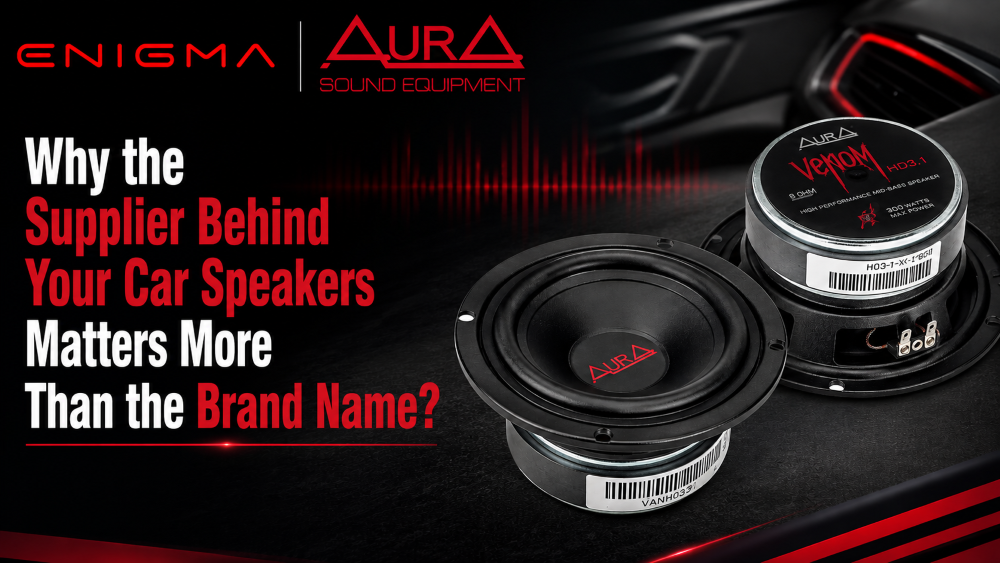
Enigma supplies Aura Speakers directly, which matters mostly because it removes a layer of guesswork buyers usually can’t see from a product listing. A car speaker supplier that also handles its own manufacturing tends to catch defects earlier, before a batch ships out to a hundred different resellers with their own labels stuck on top.
What a decent car speaker supplier should offer beyond the speaker
Warranty support is where most suppliers quietly cut corners. A speaker rated for three years on paper means very little if the aura speaker supplier behind it takes six weeks to respond to a claim, or worse, blames the installer for a manufacturing defect.
Consistency across batches matters too, and it’s the thing almost nobody checks before buying. Two speakers from the same model line, bought six months apart, should sound identical. They don’t always. A car accessories supplier juggling too many product lines at once sometimes lets quality control slip on older SKUs nobody’s actively monitoring anymore.
Impedance matching is the odd detail that trips up more installs than people expect. A 4-ohm speaker paired with an amp tuned for 2-ohm stability can run hot and distort at moderate volume, and that’s rarely the speaker’s fault when it happens.
Picking the best car speakers without falling for packaging
Every listing online claim to sell the best car speakers on the market, which tells a buyer almost nothing useful. Frequency response range and sensitivity rating matter more than the box art. A speaker rated at 90dB sensitivity needs noticeably less amp power to hit the same volume as one rated at 84dB, and that gap adds up fast on a budget system.
Component sets outperform coaxial speakers for sound separation, though coaxials install faster and cost less upfront. Neither is objectively better — depends on the upgrade someone’s actually after.
A Best car accessories supplier worth dealing with will actually explain this trade-off instead of just pushing whatever’s got the highest margin that month. Aura Speakers spans both component and coaxial options at a few different price points, which at least gives buyers room to decide based on need rather than whatever’s in stock. Whether it’s the best car speakers on paper or the reputation of a best car accessories supplier overall, checking who’s actually behind the label beats trusting packaging every time.
FAQs
Does buying from a car speaker supplier directly cost less than going through a retailer?
Sometimes, though not always. Retailers add markup, but suppliers sometimes have minimum order requirements that don’t suit a single buyer.
What sensitivity rating should I look for in the best car speakers?
Anything above 88dB is solid for a factory amp setup. Below that, expect to need an aftermarket amp for real volume.
How do I know if a car accessories supplier actually manufactures what they sell?
Ask directly, or check if the company name on the warranty card matches the brand printed on the product itself.
Is component or coaxial better for daily driving?
Coaxial handles daily background listening fine and costs less. Component sets are worth it mainly for people chasing a cleaner soundstage.
Do all Aura speaker supplier warranty claims require the original invoice?
Usually, yes. Worth keeping the purchase receipt somewhere safe rather than assuming the installer’s records will cover it later.