In 2026, motorcycle shipping within the US typically costs about $300 to $1,200 for open transport, depending mainly on distance, with enclosed transport running roughly 40% to 60% more. Most domestic shipments are delivered in 3 to 10 days after pickup. The cheapest safe option is usually a standard motorcycle on an open carrier booked two to three weeks ahead.
Shipping a motorcycle is different from shipping a car. Bikes are lighter, so the base price is often lower. But they need proper securing, careful loading, and a carrier who has handled motorcycles before. This guide covers what you’ll pay, what moves the price, how long it takes, and how to get your bike there without a scratch.
How Much Does Motorcycle Shipping Cost in 2026?
Published industry estimates for 2026 vary, but most land in the same range. A standard motorcycle on open transport typically costs between $300 and $1,200 depending on the route. Per-mile rates average around $0.60, with short routes costing more per mile than long ones.
Here is a practical estimate by distance:
| Distance | Open Transport (est.) | Enclosed Transport (est.) |
|---|---|---|
| Under 500 miles | $250 – $500 | $350 – $750 |
| 500 – 1,500 miles | $400 – $750 | $575 – $1,100 |
| 1,500+ miles (cross-country) | $600 – $1,200 | $850 – $1,800 |
These are estimates, not quotes. Fuel prices, season, and route demand change rates week to week.
Crating a motorcycle for added protection typically adds roughly $200 to $400 to the freight cost.
What Affects Motorcycle Shipping Cost?
Understanding the pricing logic helps you read any motorcycle shipping quote and spot the ones that look too good to be true.
- Distance and route. Longer trips cost more in total but less per mile. Major corridors between big metros are cheaper than rural pickups, because carriers fill trucks faster on busy lanes.
- Open vs. enclosed transport. Enclosed carriers protect against weather and road debris. They cost more and have fewer trucks available.
- Bike size and weight. A 400 lb sport bike and a 900 lb touring cruiser take up different amounts of trailer space and need different securing methods.
- Condition. A bike that doesn’t start or roll needs a winch and extra labor, which usually adds a fee.
- Season. Spring and summer riding season, and snowbird travel in fall and spring, push prices up. Winter shipping on northern routes can be cheaper but slower.
- Pickup flexibility. A wider pickup window gives dispatchers more room to find a truck, which often lowers the price.
- Door-to-door vs. terminal. Door-to-door is more convenient. Terminal delivery can save money but means extra trips for you.
- Fuel costs. Carriers adjust rates when diesel prices move.
How to Get an Accurate Motorcycle Shipping Quote
A motorcycle shipping cost calculator or cost estimator gives you a ballpark in seconds. For a number you can actually book at, provide these details:
- Pickup and delivery ZIP codes
- Year, make, and model
- Whether the bike runs and rolls
- Any modifications (windshields, saddlebags, aftermarket exhausts, trailers hitches)
- Open or enclosed preference
- Your first available pickup date
Accurate details matter. Misreported weight or modifications are one of the most common reasons a final price changes after booking.
Questions to ask before you accept any motorcycle transport quote:
- Is this price all-in, or can it change after booking?
- Is a deposit required, and is it refundable?
- What happens if no carrier accepts the price?
- How wide is the pickup window?
- Can I track the shipment, and how do I reach the driver or dispatcher?
- What insurance is on the carrier, and what does it cover?
Quotes that come in far below everyone else’s are a warning sign. Lowball quotes can leave your bike sitting unassigned for weeks while the price is quietly raised. A realistic quote beats a cheap one that never gets picked up.
Open vs. Enclosed vs. Crated: Which Is Right for Your Bike?
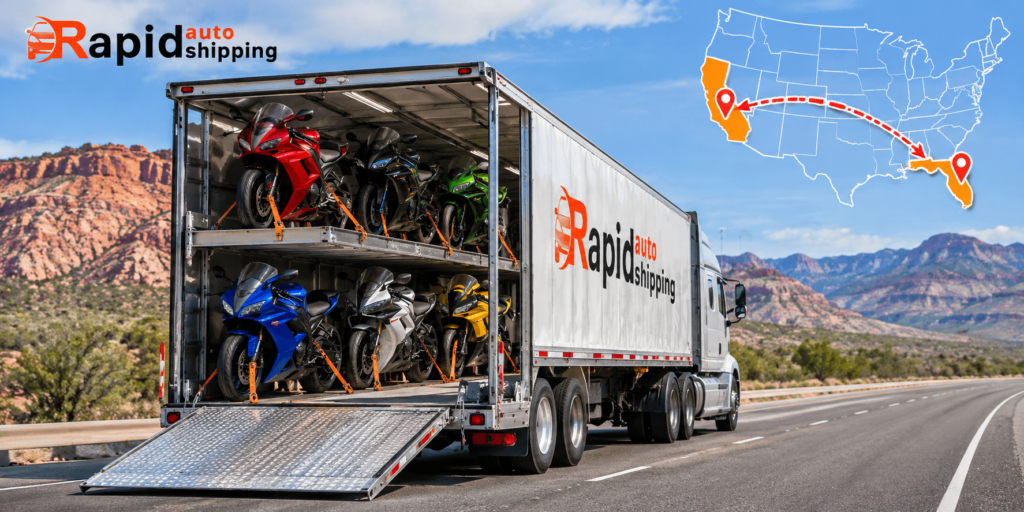
Open transport is the standard, most affordable choice. Your motorcycle rides on a multi-vehicle trailer, exposed to weather like any other vehicle on the highway. For most daily riders, it’s safe and reliable.
Enclosed transport shields your bike from rain, sun, and road debris. It costs roughly 40% to 60% more. It’s the right call for classic, custom, vintage, or high-value motorcycles, and for owners who want maximum peace of mind.
Crated shipping places the bike in a wooden crate. It offers the most protection and is common for international moves or fragile restorations. It adds cost and extra handling, so it’s rarely necessary for ordinary domestic moves.
Rule of thumb: If the bike is worth more than the price difference, or has irreplaceable parts, go enclosed. If it’s a daily rider, open is typically enough.
How to Find the Cheapest Motorcycle Shipping (Without Taking Risks)
Cheapest motorcycle shipping isn’t about the lowest number on screen. It’s about the lowest price that actually gets your bike picked up and delivered undamaged. These strategies lower your cost safely:
- Book 2 to 3 weeks ahead. Last-minute orders cost more.
- Be flexible on dates. Even a few days of flexibility can lower your rate.
- Choose open transport if your bike isn’t a high-value collectible.
- Ship between major cities or meet the driver near a major route if you’re in a remote area.
- Avoid peak season when you can.
- Remove accessories that add weight or complicate loading.
- Compare quotes carefully. Look at what’s included, not only the price.
How Long Does Motorcycle Shipping Take?
Transit time depends on distance and route. Delivery windows are estimates, because weather, traffic, and other stops on the carrier’s route can shift the schedule.
| Distance | Typical Transit Time |
|---|---|
| Under 500 miles | 1 – 3 days |
| 500 – 1,500 miles | 3 – 6 days |
| 1,500+ miles (coast to coast) | 7 – 10 days |
Pickup is separate from transit. After you book, a carrier is assigned and picks up the bike within a pickup window, often one to five days, sometimes longer in peak season or on rural routes. Plan for the total timeline, not only the days on the road.
How to Ship a Motorcycle Safely: Step-by-Step Checklist
Preparing your bike properly protects you and makes the handoff smoother.
Before pickup
- Wash the bike. A clean bike makes it easy to document existing marks.
- Photograph everything. Take clear, dated photos of every side, the tank, the fairings, the wheels, and the odometer.
- Check for leaks. Fix any fluid leaks, as carriers may refuse leaking vehicles.
- Lower the fuel. Keep the tank at about a quarter full or less.
- Secure or remove loose parts. Take off saddlebags, GPS units, phone mounts, and anything that could shake loose. Fold or secure mirrors where possible.
- Disable the alarm and tell the driver about any quirks, like a sticky kill switch or tight steering lock.
- Check the battery. A charged battery avoids a “won’t start” fee.
- Keep keys and documents handy. Give the driver one key and keep a spare.
- Leave personal items out. Carrier insurance generally doesn’t cover personal belongings.
At pickup
- Inspect the bike with the driver and review the Bill of Lading. It records the bike’s condition at pickup.
- Make sure every existing mark is noted before you sign.
At delivery
- Inspect before you sign. Compare the bike to the pickup report and your photos.
- Note any damage on the Bill of Lading before accepting delivery, and contact the company immediately.
Is Motorcycle Shipping Insured?
Licensed carriers must carry cargo insurance, but coverage limits and exclusions vary. Before you book:
- Ask for the carrier’s insurance details in writing.
- Ask about the deductible and what’s excluded, such as aftermarket parts or personal items.
- Check whether your own motorcycle policy covers transit.
Documentation is your best protection. Your photos and the signed Bill of Lading are what make any claim straightforward.
How to Choose a Motorcycle Shipping Company
Look for the following when comparing providers:
- Licensing: a valid USDOT and MC number you can verify.
- Motorcycle experience: carriers equipped with wheel chocks, soft straps, and proper tie-downs.
- Transparent pricing: a clear explanation of what’s included and what could change the price.
- Communication: a real person you can reach before, during, and after pickup.
- Tracking and updates: regular status updates, not silence.
- Real reviews: patterns over time matter more than a single rating.
- Fair cancellation terms: no surprises if plans change.
Why Ship a Motorcycle With Rapid Auto Shipping?
Rapid Auto Shipping connects riders across the United States with vetted carriers for local and interstate motorcycle shipping. When you request a motorcycle shipping quote, you get:
- A clear explanation of your price and what affects it
- Open and enclosed options, so you choose what fits your bike and budget
- Door-to-door service where possible
- Help from real people who walk you through pickup, transit, and delivery
- Support for standard bikes, cruisers, touring bikes, sport bikes, and classics
Whether you’re relocating, buying a bike from a seller in another state, heading to a rally, or sending a bike to a family member, we make the process simple.
Ready to ship? Get your free motorcycle transport quote from Rapid Auto Shipping today, and have your bike on the road with a carrier you can trust.
Frequently Asked Questions About Motorcycle Shipping
How much does it cost to ship a motorcycle?
Most US shipments cost between $300 and $1,200 on open transport. Distance is the biggest factor. Enclosed shipping typically adds 40% to 60%.
What is the cheapest way to ship a motorcycle?
Open transport, booked two to three weeks ahead with flexible dates, between major cities. Avoid peak season when possible.
How long does it take to ship a motorcycle across the country?
Coast-to-coast transit usually takes 7 to 10 days after pickup. Pickup itself may take a few days after booking.
Is it better to ship a motorcycle or ride or trailer it myself?
For long distances, shipping often costs less than the fuel, lodging, time off work, and wear on the bike, especially for cross-country moves. It also removes the risk of an accident on the road.
Do I need to drain the gas before shipping?
You don’t need to drain it, but keep the tank at about a quarter full or less. Ask your carrier for their specific rule.
Does motorcycle shipping include insurance?
Licensed carriers carry cargo insurance, but coverage varies. Ask for details in writing and check whether your own policy applies.
Can you ship a motorcycle that doesn’t run?
Usually yes, but expect an added fee for winching and extra handling. Always tell the company beforehand.
Can I leave accessories on my motorcycle?
Remove anything loose or detachable, like bags, phone mounts, and GPS units. Permanently attached accessories should be disclosed in your quote request.
Should I choose open or enclosed transport?
Open is fine for most daily riders. Choose enclosed for classic, custom, or high-value bikes.
What if my motorcycle is damaged during shipping?
Note it on the Bill of Lading at delivery, take photos, and contact the company right away so a claim can be started.
Can I ship more than one motorcycle?
Yes. Multi-bike shipments are often possible and can reduce the per-bike cost. Ask for a combined quote.
How do I get an accurate motorcycle shipping quote?
Provide your ZIP codes, bike details, condition, transport type, and dates. The more precise the information, the more reliable the price.